No products in the cart.
People often ask me, what is Fire Roasted Coffee? When I explain that we roast our coffee on a fire, the follow-up question is often: how is coffee usually roasted and why should it be roasted?

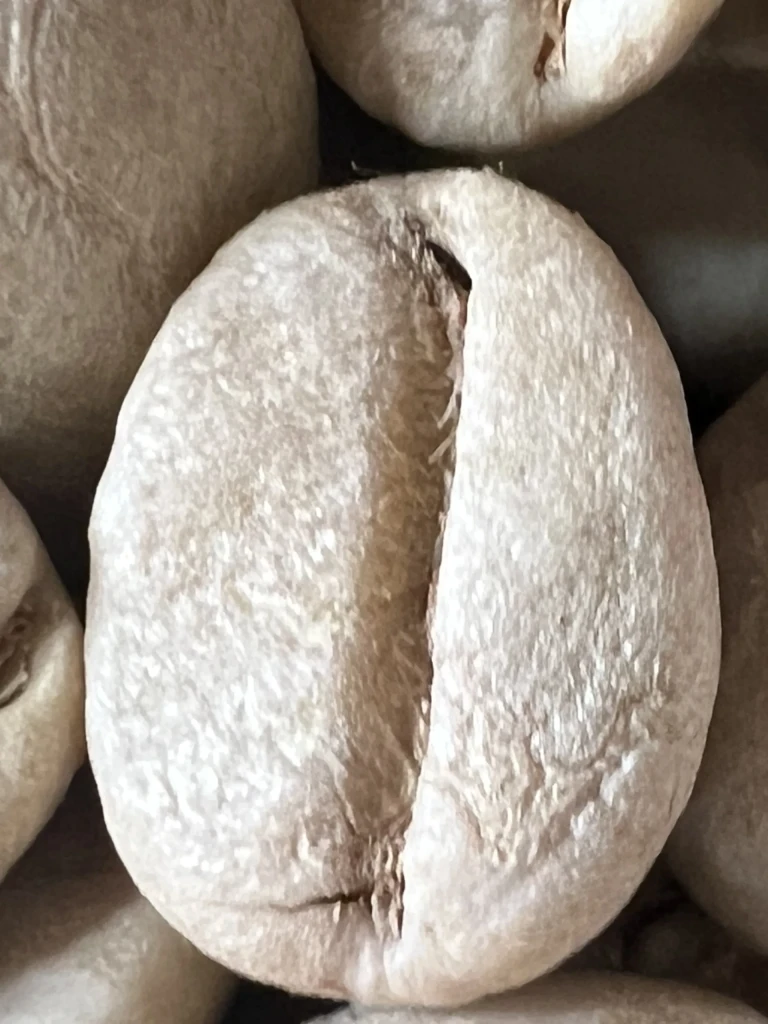
Without going into the details of coffee roasting, you need to understand that before the coffee bean is roasted, it is green and hard and smells like grass. When you try to bite a green coffee bean, chances are that you will break a tooth or two before the bean breaks.
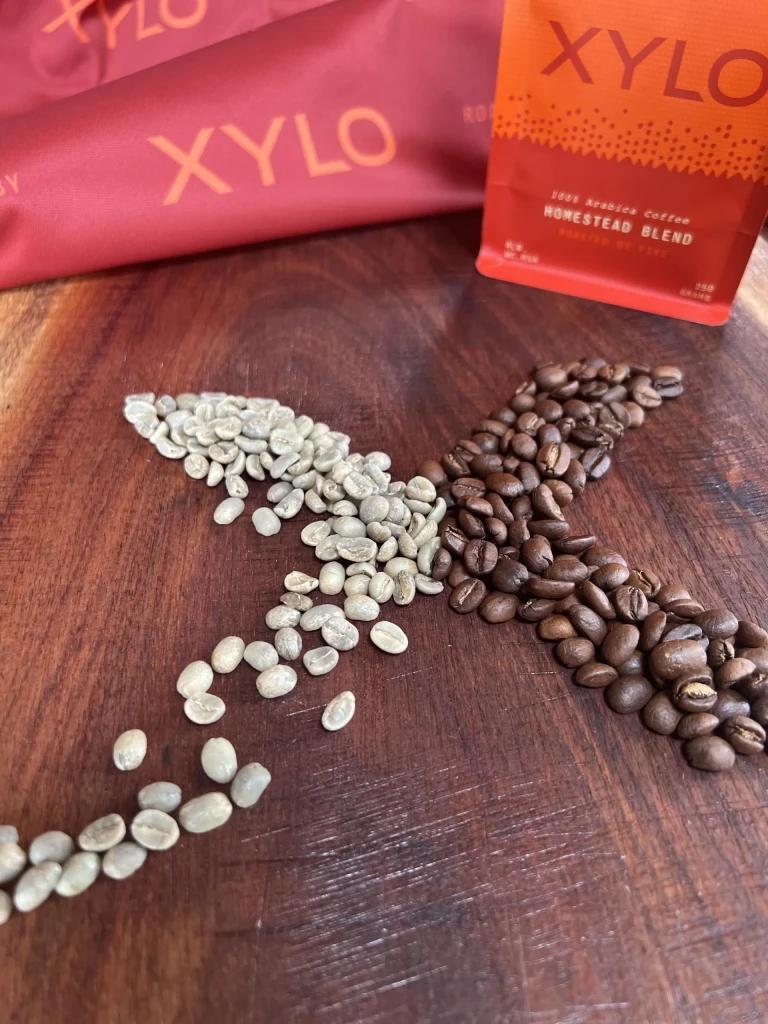
Applying heat to the green coffee bean causes a chemical reaction that transforms the bean’s physical and chemical makeup. The heat breaks down the bean’s cell structures, removing moisture, and creating the complex flavors and aromas we associate with coffee. The coffee beans need to be stirred or tumbled to ensure even heat distribution throughout the bean. When you try to bite into the same coffee bean once it’s roasted, it will crumble in your mouth, releasing the familiar coffee taste at the same time.
In modern coffee roasters, heat is supplied by either electric or gas heating sources. However, it is safe to say that when coffee was first roasted many centuries ago, wood fire heat was the only heat source available. Comparing fire with an electrical heating element or gas flame, one quickly realizes that the modern-day heating sources are more easily controlled by using thermostats and buttons or knobs, making modern-day roasters the roasters of choice for most coffee roasters.
When we first roasted coffee (about seven years ago) on our off-grid farm, the only heat source we had was fire. Visitors having a cup of coffee all mentioned that our coffee tasted different than what they were used to. Fast forward a few years, and we got the same remarks from customers at our shops. Our comments were always: it’s like cooking steak in a pan or on gas vs a “braai.” Steak at a braai always tastes better.
So the question still remained: why does fire roasted coffee taste different from coffee roasted with other heat sources?
I did a bit of research to compare the different heat sources when it comes to coffee roasting. Unfortunately, firewood roasting is less studied in modern contexts and is often considered traditional or artisanal. The references that I did find mentioned that wood-fired roasting is noted for producing a unique flavor profile due to the presence of moisture, resins, aromas, sugars, and oils in the heat-carrying air. What stood out for me about wood fire is the moisture and sugars present in wood fires.
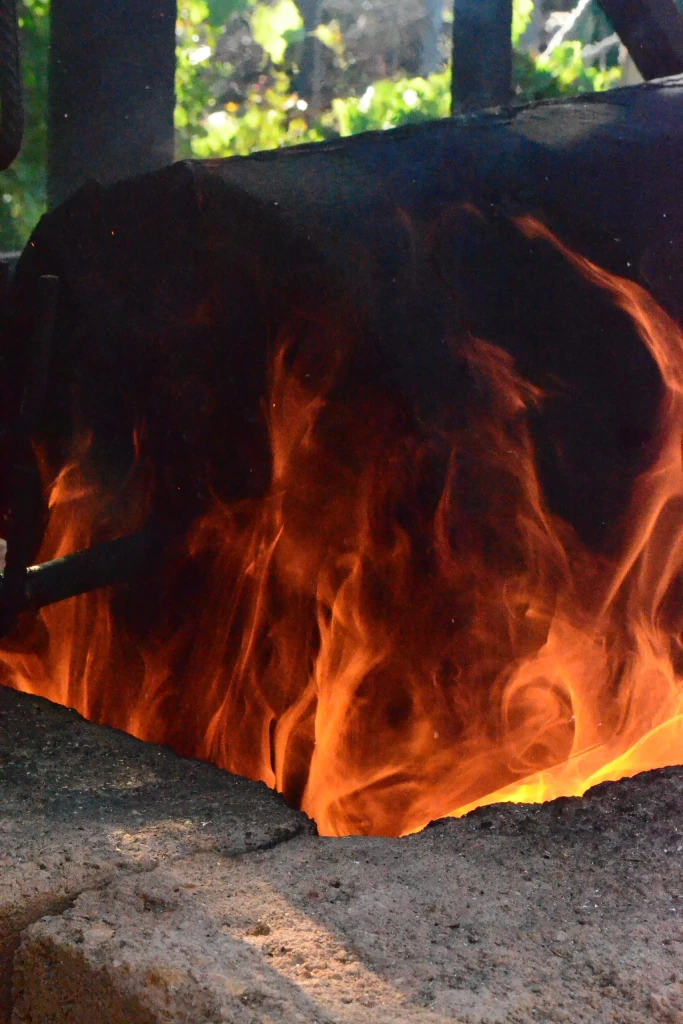
The most important difference between fire heat and other heat sources is moisture. Wood, even when seasoned, contains residual moisture (typically 10-20% in well-dried wood). During combustion, this moisture is released as water vapor, which becomes part of the heat-carrying air in the roasting chamber. Additionally, the combustion of organic compounds in wood produces steam and other volatile compounds, increasing the humidity of the roasting environment.
The presence of water vapor in the roasting air can slow the drying phase of coffee beans (the initial stage where beans lose moisture). This may lead to a more gradual moisture loss, potentially preserving certain volatile flavor compounds that are sensitive to rapid drying. The moist heat may also enhance Maillard reactions (responsible for complex flavor development) by maintaining a slightly wetter bean surface during early roasting stages.
The reference to “sugars” in wood-fired roasting likely refers to compounds released or formed during wood combustion that influence the roasting environment, rather than literal sugar molecules being transferred to the coffee.
Wood contains complex carbohydrates like cellulose (40-50% of dry wood) and hemicellulose (20-35%), which break down during combustion or pyrolysis (thermal decomposition). Hemicellulose, in particular, degrades at roasting temperatures (200-300°C) into simpler sugars, such as glucose, xylose, and mannose, along with volatile organic compounds. These sugars may not remain intact but contribute to the formation of caramelized or smoky aroma compounds in the heat-carrying air.
The presence of these sugar-derived compounds in the roasting air could theoretically enhance caramelization or Maillard reactions on the coffee bean surface. For example, glucose or xylose derivatives might interact with amino acids in the bean, forming melanoidins (melanoidins are brown, high-molecular-weight, nitrogen-containing compounds that are the final products of the Maillard reaction, which occurs during the thermal processing of food). In gas and electric roasting, these sugars are absent from the heat sources.
No scientific studies about the impact of wood fire on coffee roasting could be found, but looking at the way in which wood fire heat differs from gas and electric heat sources might give a clue of why XYLO Coffee tastes different. Order a bag of coffee online or come on over to taste the difference for yourself.
©2026 - XYLO Coffee
XYLO® is a trademark of Fire Roasted Coffee Pty (Ltd)